Our Dual Carbon Story
Productive Cane and Protected Rainforest
Husk Distillers, Tumbulgum operates Australia’s only fully integrated farm-to-bottle rum distillery and is an active member of the Sunshine Sugar Co-operative, representing more than 150 years of sugar cane farming.
We operate a highly productive farming, harvesting, milling and production facility in the Northern Rivers of NSW and, as custodians of approximately 1.5% of the region’s remaining Big Scrub rainforest, we are actively engaged in its ecological rehabilitation and committed to our long-term sustainability vision.
1. THE DISTILLERY
A Fully Integrated Farm-to-Bottle Operation
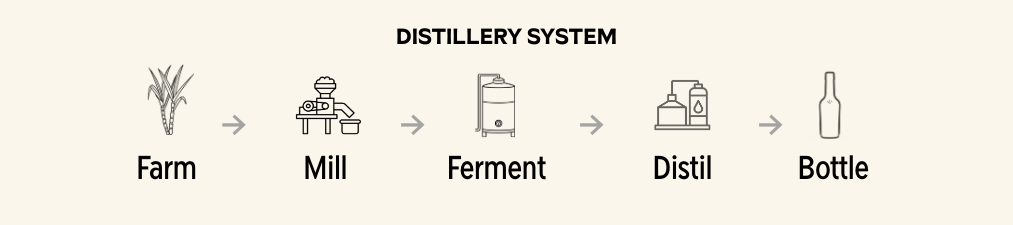
Our 60-hectare property brings agriculture, production and conservation together in one working landscape.
12 hectares of laser-levelled cane fields
12 hectares of remnant floodplain rainforest
Pastoral, industrial, hospitality and residential land uses
50–60 local jobs supported in the Tweed Valley
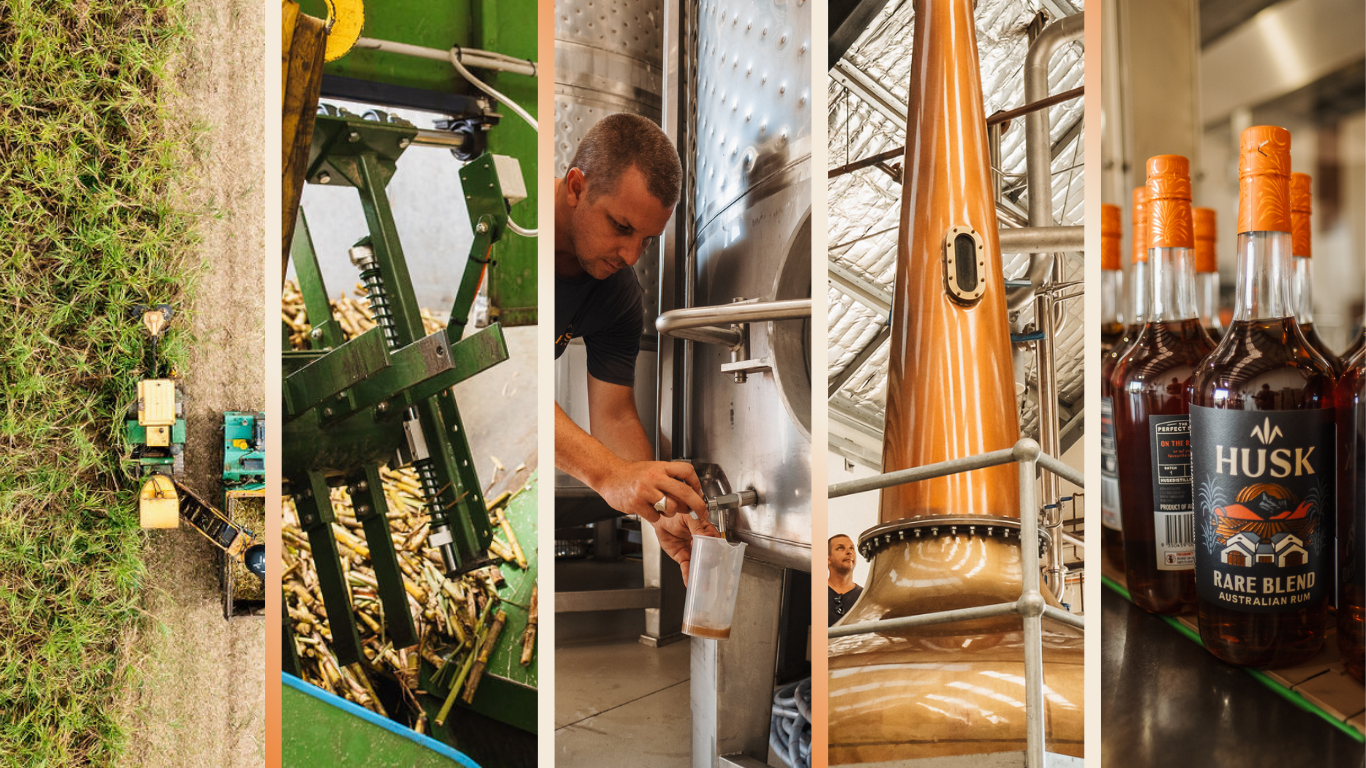
We grow, harvest, mill and distil on site — maintaining complete oversight from soil to spirit.
Our compact but highly productive model allows us to remain deeply connected to place while supporting the local community and economy.
2. THE CANE
A Renewable Crop in a Biogenic Carbon Cycle
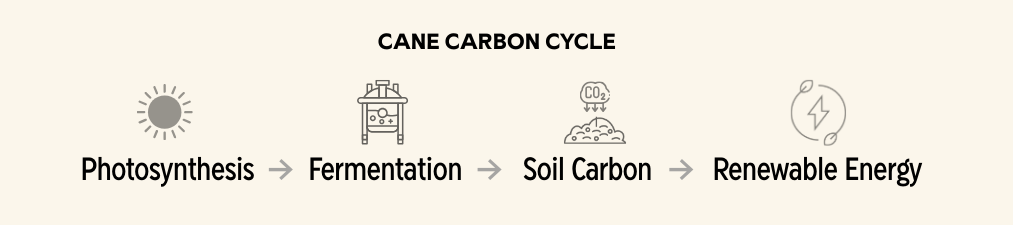
Sugar cane is a highly productive renewable crop.
We capture approximately 59–63 tonnes CO₂ per hectare per year through photosynthesis
Some carbon is released as biogenic CO₂ during fermentation of fresh cane juice
This forms part of a natural plant-based carbon cycle
At the base of our operation, we harvest cane green and make rum directly from the freshest, clean juice of select local cane varieties.
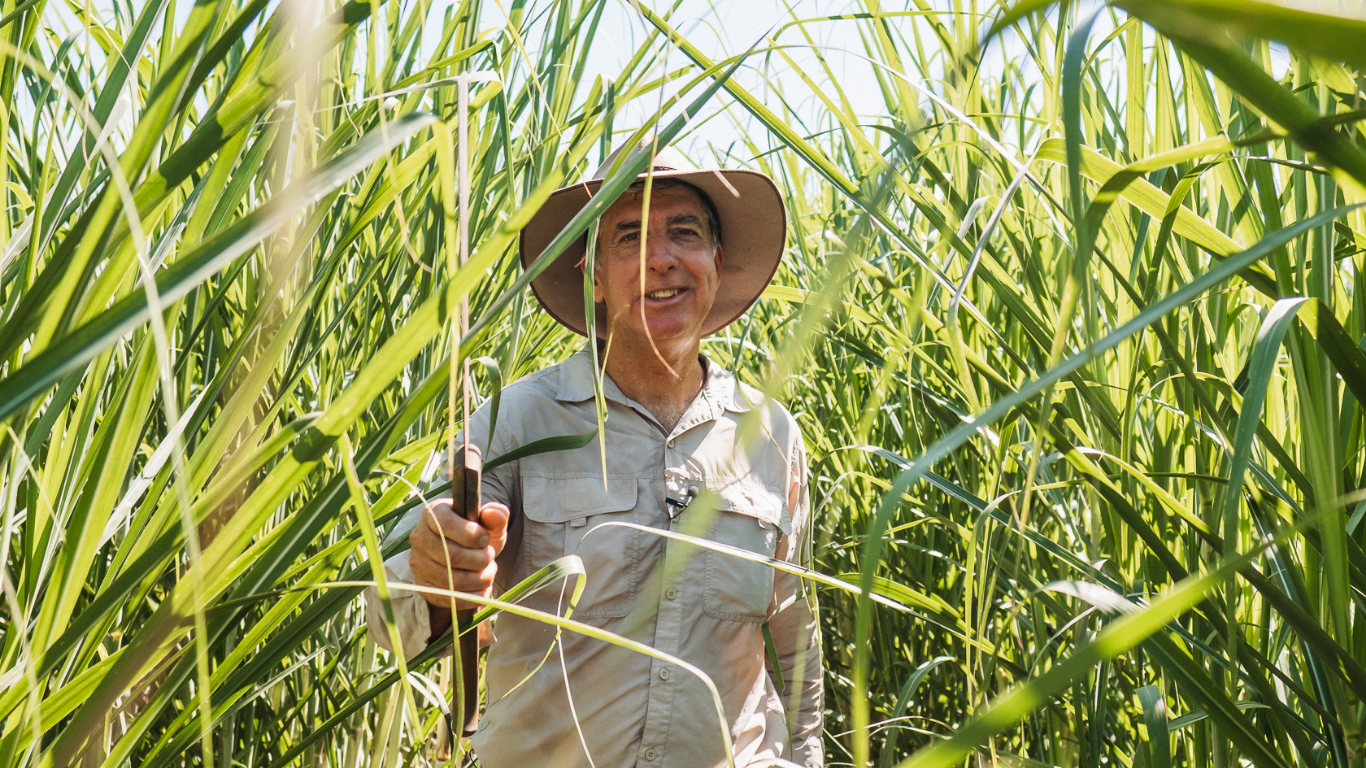
We retain the trash blanket on paddock, which builds soil organic carbon at rates typical of best-practice northern NSW sugarcane:
0.7–2.2 tonnes CO₂ per hectare per year under standard management
Any cane surplus to Husk requirements is sent to the Condong Sugar Mill, where:
Sugar is extracted
Bagasse is used to produce renewable energy
In 2025, we contributed:
80 tonnes of raw sugar
Approximately 80,000 kWh of electricity for use in the Condong mill and distribution to homes and businesses in the local area
3. THE RAINFOREST
Protecting the Big Scrub
Complementing this productive system are our adjoining, uncleared lowland rainforest remnants.
These critically endangered Big Scrub ecosystems:
Store hundreds of tonnes of carbon per hectare in biomass and soil
Sequester an estimated 2–7 tonnes CO₂ per hectare per year in mature stands
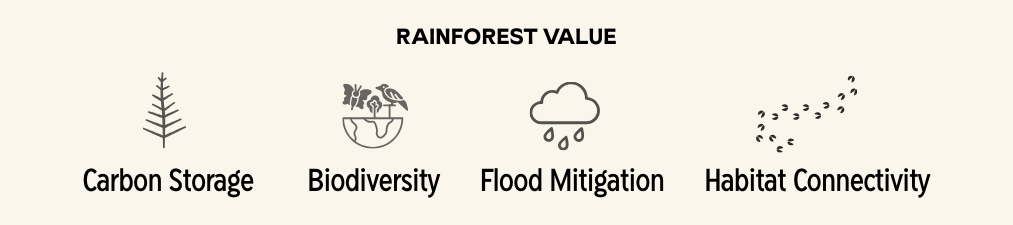
While annual carbon capture is modest compared to cane, their true value lies in:
Biodiversity
Habitat connectivity
Flood mitigation
Long-term ecological resilience
To date, we have:
Installed protective fencing across 50% of this forest
Undertaken invasive weed eradication
Commenced ongoing ecological rehabilitation
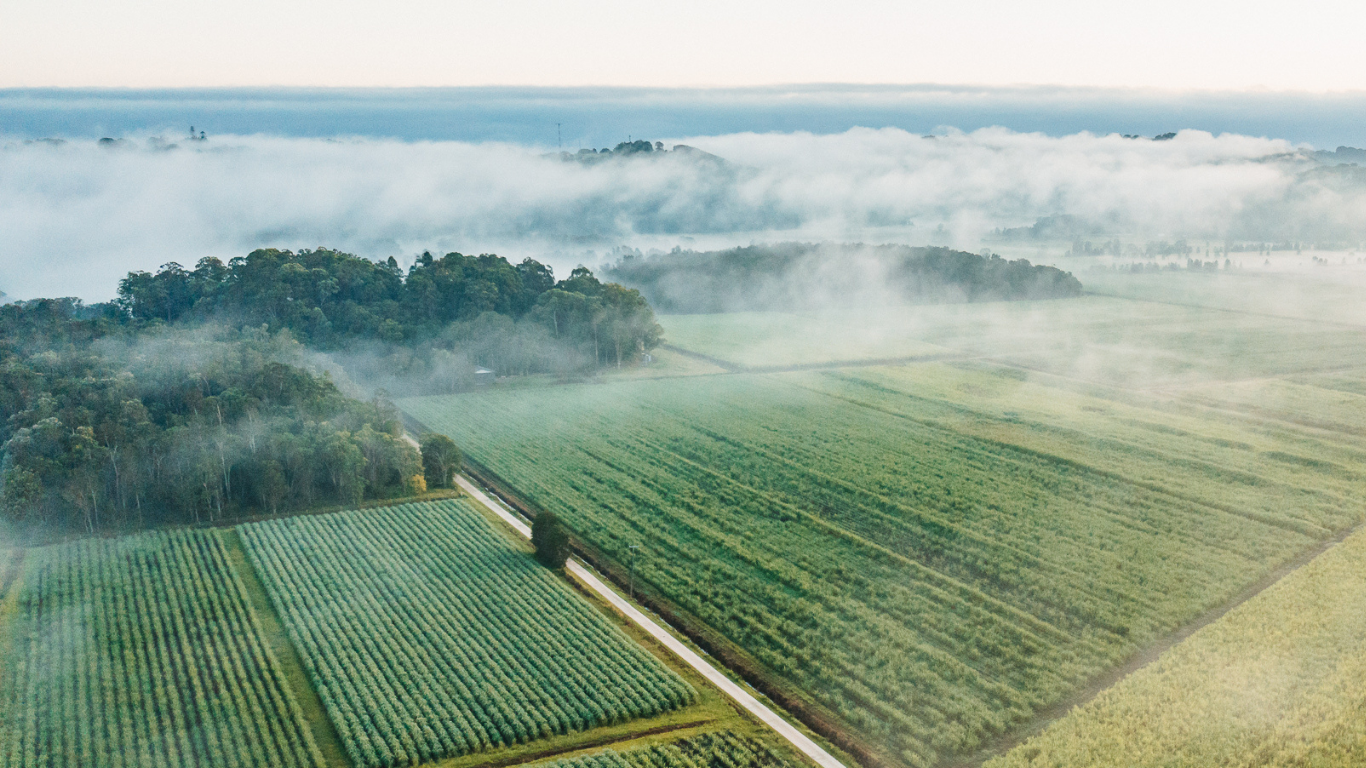
We are committed to protecting — and where possible expanding — these remnant forests.
Independent consultants have been engaged to:
Conduct baseline soil carbon assessments on our cane blocks
Assess carbon stocks within our rainforest remnants
Future reporting will contain verified, farm-specific data.
One Integrated Landscape
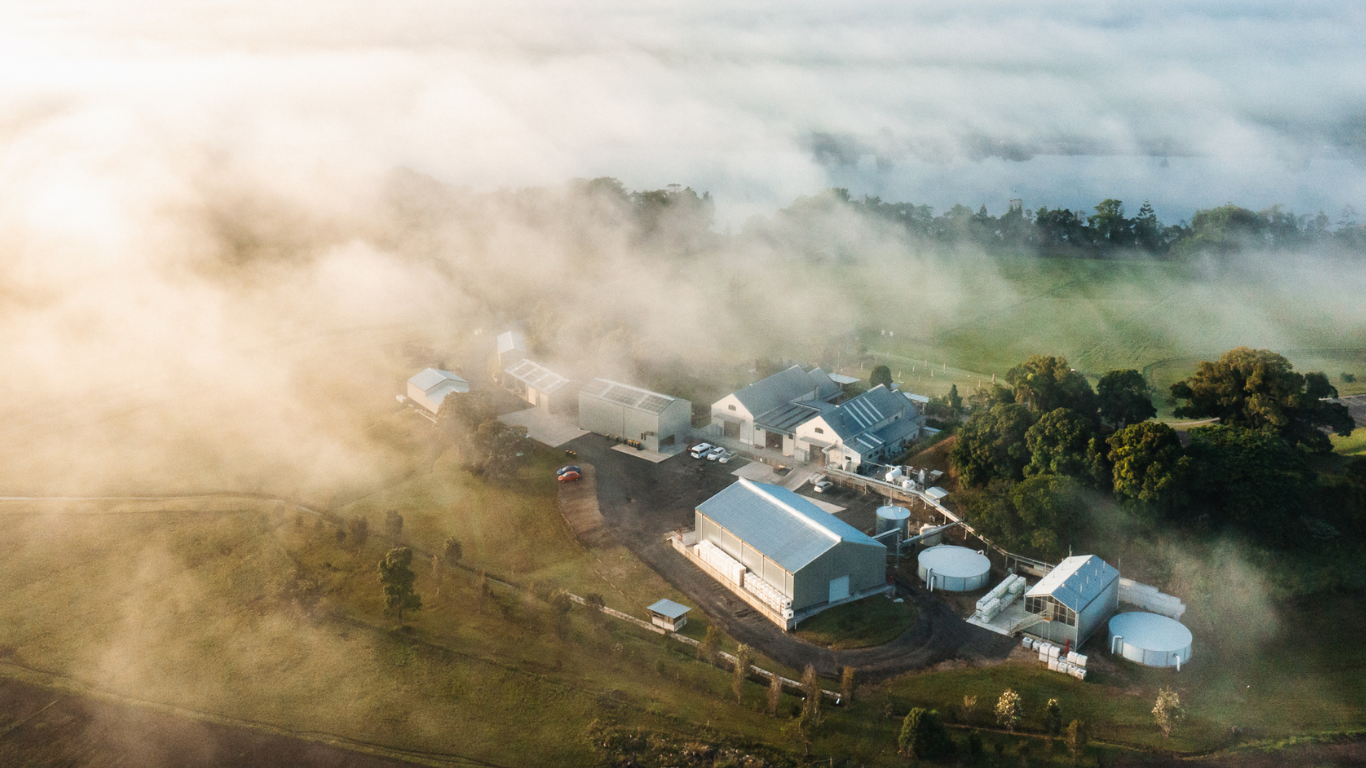
Our approach is grounded and practical:
Highly productive regenerative cane grown alongside protected rainforest.
Production and protection operating side by side.
This integrated landscape — high-yielding agriculture coupled with ecological stewardship — is what makes Husk Rum genuinely terroir-driven and climate-positive.